What a Home Inspector Can't See: Common Limitations of Home Inspections in Pelham, AL
By Patrick S Dean · November 13, 2026 · 5 min read
A client called me last spring about a house in Helena — a nice brick ranch on a slab, well-kept, passed every visual check I made. Two months after closing, she was mopping up water in the hallway because a supply line inside the wall had been weeping for who knows how long. Nothing on my report was wrong. But nothing on my report could have caught it either, because a standard home inspection is a visual, non-invasive evaluation — not a prediction.
That story isn't a knock on inspectors. It's the reality of what a home inspection is. At HomeScan Home Inspection Services LLC, I walk through this with every client, because understanding the limits of an inspection is just as important as reading the findings. Here are the limitations I run into most often in Pelham, Hoover, Vestavia Hills, and the rest of our service area — and what you can do about them.
An Inspection Is Visual and Non-Invasive by Design
A general home inspection is a limited, visual examination of the readily accessible systems and components of a home. That word "accessible" does the heavy lifting.
In practice, that means:
- I don't open walls, pull up flooring, or dismantle equipment.
- I don't move the seller's stored boxes to reach an attic hatch or crawlspace door.
- I don't dig up buried drain lines or excavate around a foundation.
- I don't test every outlet, every window, or every appliance through a full cycle.
In older Homewood and Mountain Brook homes, this matters a lot. Finished basements and converted attics hide plumbing and wiring that simply isn't visible on inspection day. A knob-and-tube circuit behind drywall, or a cast-iron drain that's been patched, may not show any symptom until months later.
What I can do is report conditions I can observe and note where further evaluation by a specialist makes sense. That's the honest scope of the job.
What's Hidden Behind Walls, Under Slabs, and Underground
This is the big one in our area, and it's worth its own section.
Behind the walls. Plumbing leaks, slow drips, and past repairs are usually invisible. A stain on a ceiling tells a story; a pinhole leak inside a wall doesn't.
Under the slab. Much of Pelham, Chelsea, and Hoover is built on slab-on-grade foundations. Drain lines run under the concrete. If a cast-iron or older PVC line is cracked or root-intruded, the first sign is often a wet spot, a sewage smell, or a backup — long after closing.
This is exactly why I offer a Sanitary Lateral Video Scope as an add-on service. Running a camera down the sewer lateral lets us actually see the pipe from the house to the city connection — cracks, offsets, root intrusion, bellies. It's the closest thing to X-ray vision we have for the underground portion of the system, and it's one of the most valuable extras for slab homes in Shelby County.
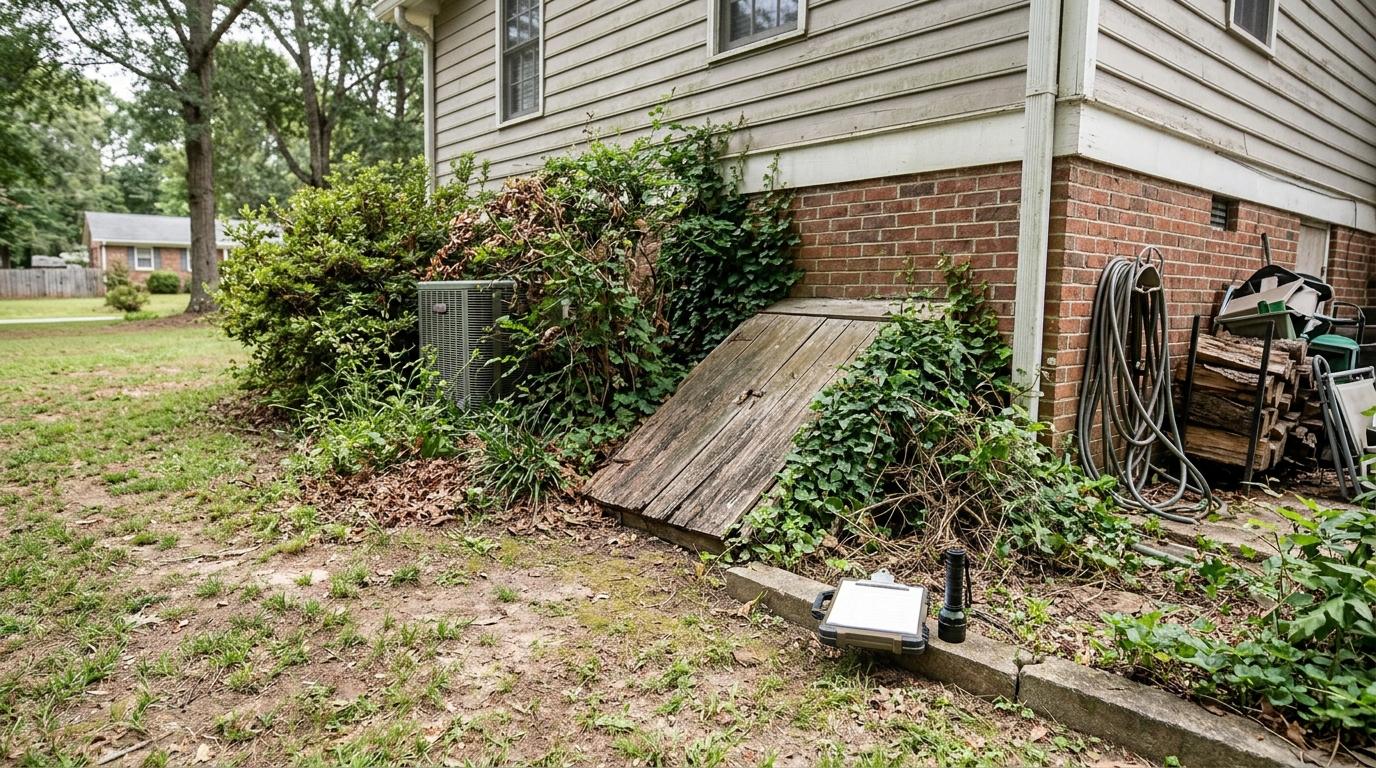
In the crawlspace. Low-clearance crawlspaces are common in older Pelham and Jefferson County homes. I use a limited-clearance crawl bot where it fits, but some spaces are simply too tight for a full evaluation, and I'll say so in the report.
Weather, Season, and Timing Change What We See
Alabama's climate is hard on houses, and the season you inspect in changes the picture.
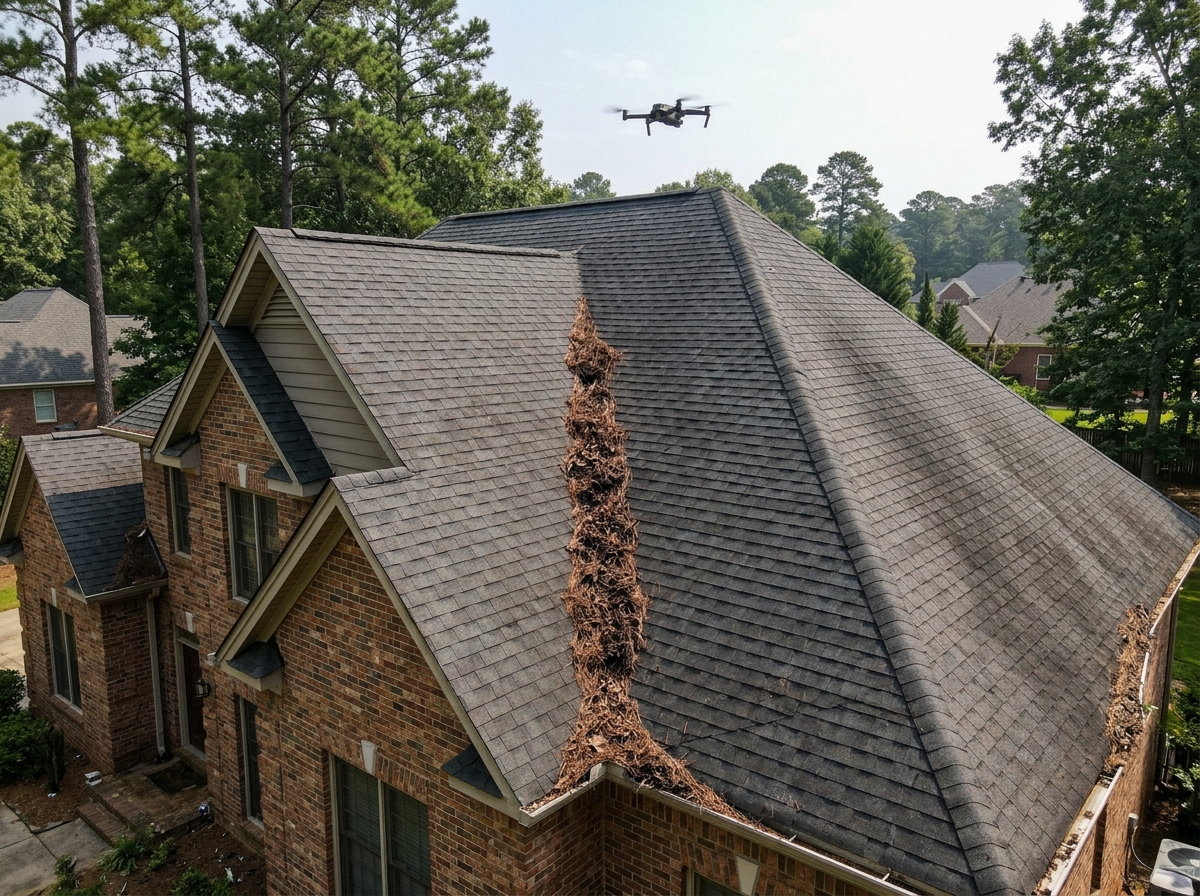
- Roofs. A roof inspected in a dry July may look fine. The same roof in a soaking February rain might show active leaks. I use drone services for steep or high roofs in Trussville and Vestavia Hills, which helps — but a drone can't see the underside of a shingle.
- HVAC. Testing an air conditioner in January tells you it turns on, not that it will keep up with a 98-degree August afternoon.
- Foundations and drainage. Summer drought can hide the seasonal soil movement that shows up after a wet winter. Cracks that are cosmetic in August may widen by spring.
- Moisture and mold. High humidity in the Birmingham metro means attics, crawlspaces, and bathrooms are prone to moisture issues. I use infrared technology to spot temperature anomalies that suggest hidden moisture, but confirming mold requires lab testing by a qualified specialist — that's outside the scope of a general inspection.
One visit on one day is a snapshot, not a year-long documentary. That's not a flaw in the process; it's the nature of it.
Things That Are Simply Outside Our Scope
A home inspector is a generalist. That's by design, and it's also a limitation.
A standard inspection does not include:
- Radon testing — common in our region's geology, but a separate test.
- Mold and air quality sampling — requires lab analysis.
- Asbestos and lead paint identification — requires specialized testing.
- Structural engineering opinions — if I see something that concerns me, I'll recommend a licensed structural engineer, not guess.
- Permits, code compliance, and zoning — those are questions for the local building department or an attorney.
- Septic systems — a septic evaluation is its own specialty.
- Pest and termite — that's a licensed pest control inspection.
I'll flag what I see and point you toward the right professional. What I won't do is pretend a general inspection covers all of it. If a seller's disclosure or your realtor raises one of these, treat it as a separate item to schedule.
Why Limitations Aren't a Reason to Skip an Inspection
Here's the thing: a home inspection is still one of the best tools you have. It just works best when you understand what it is.
A good inspector doesn't hide the limits — they name them, explain them, and help you decide what additional testing is worth it for the specific house you're buying. A 1950s Homewood bungalow and a 2015 Chelsea new-build have very different risk profiles, and the recommendations should reflect that.
After 25-plus years in construction, fire service, and contracting before I became a licensed inspector, I've learned that the most useful thing I can give a client isn't a perfect report — it's an honest one. That means saying "I can't see this" when I can't, and telling you who can.
If you're buying in Pelham, Helena, Chelsea, Hoover, Homewood, Mountain Brook, Vestavia Hills, or Trussville — or anywhere in Shelby or Jefferson County — the goal is the same: fewer surprises after closing, and a clear picture of what you're actually buying.
Have Questions About a House You're Considering?
If you're under contract or just starting to look, I'm happy to talk through what a general home inspection covers for your specific property — and whether add-ons like a Sanitary Lateral Video Scope or drone roof imaging make sense for the home you're eyeing.
No pressure, no sales pitch. Just straight answers about what an inspection can and can't tell you.
HomeScan Home Inspection Services LLC — serving Pelham and the surrounding communities. Reach out through the website to schedule an inspection or ask a question. Patrick S Dean and the team are glad to help you make a more informed decision.