
Drone Inspections Reveal Hidden Roof Damage: A Pelham Home Inspector's View from Above
By Patrick S Dean · November 17, 2026 · 4 min read
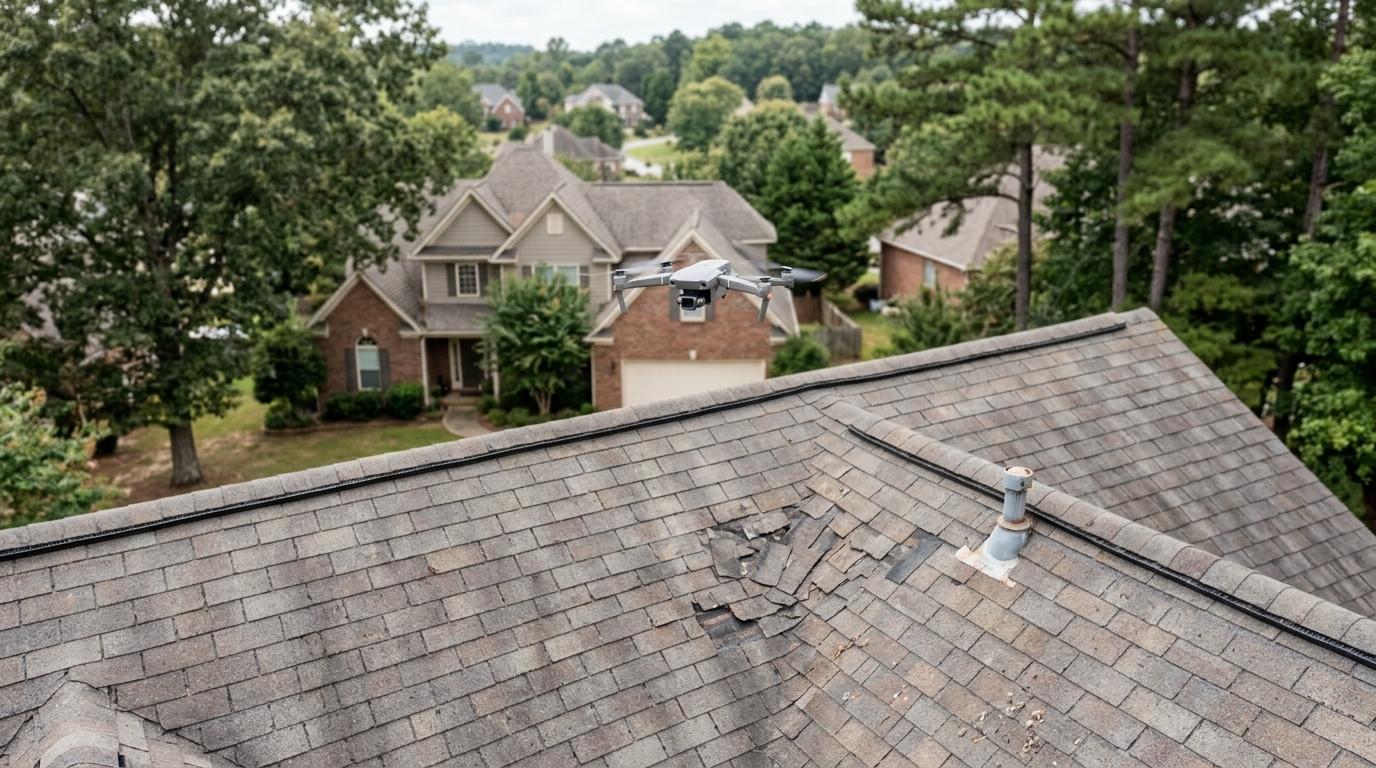
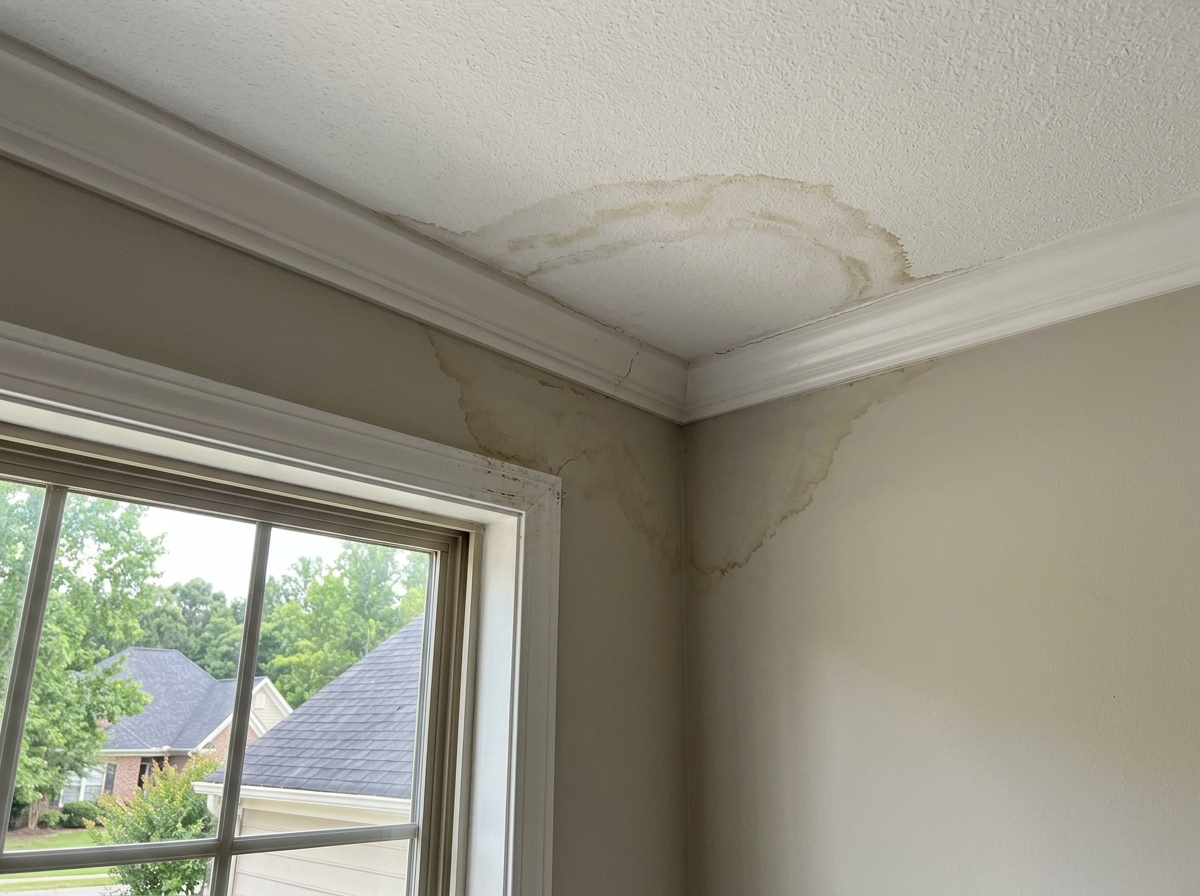
Multiple times a month, on an inspection in Pelham, Helena, or Chelsea, I find a brown ring spreading across an upstairs ceiling. By the time water shows up inside, it has usually been working its way through the roof for months. From the driveway, the shingles looked fine. From the ridge line, they didn't.
That gap — between what you can see from the ground and what's actually happening up top — is why I fly a drone as part of many roof inspections. A drone doesn't replace walking a roof when it's safe and accessible. It lets me see the parts most of us never get a clear look at: the back slope facing the tree line, the valley where two roof planes meet, the chimney flashing, and the ridge caps that take the worst of Alabama's sun.
At HomeScan Home Inspection Services LLC, drone imaging is one more tool in the kit — not a gimmick. Here's what it actually finds, and why it matters for homes in Shelby and Jefferson County.
Why Pelham-Area Roofs Hide Their Problems
Our climate is hard on roofs, and it's hard in ways that don't announce themselves.
- Summer heat and UV. Long, hot summers bake asphalt shingles. They dry out, curl at the edges, and lose granules — changes that are obvious from ten feet up and nearly invisible from the lawn.
- Afternoon storms. Pelham, Hoover, and Vestavia Hills get fast, wind-driven rain. Wind can lift shingle tabs and break the sealant strip without tearing anything off, leaving a roof that looks intact but lets water in sideways.
- Tree cover. Older neighborhoods in Homewood and Mountain Brook have mature oaks and pines. That shade is beautiful, but it keeps roofs damp, drops debris into valleys, and hides damage from every ground-level angle.
- Steep and tall roofs. Plenty of two-story homes in Chelsea and Trussville have roof pitches that simply aren't safe to walk, especially when they're wet or covered in pine straw.
In all of these cases, the damage is real but the view from the ground is misleading. That's the gap drone imaging closes.
What a Drone Actually Sees Up There
When I fly a roof, I'm not just taking a pretty picture. I'm systematically working the roof the way I would on foot, from a stable vantage point.
Typical findings include:
- Lifted or missing shingle tabs, especially along ridges and windward slopes
- Failed flashing around chimneys, vent pipes, and skylights — a very common leak source
- Cracked or deteriorated pipe boots, the rubber collars around plumbing vents that dry out and split
- Clogged valleys and gutters packed with pine straw and shingle grit
- Soft spots or sagging, which can hint at sheathing or framing issues underneath
- Storm damage — hail bruising, impact marks, or debris strikes that aren't visible from below
I pair the drone footage with infrared imaging where it helps, since temperature differences can reveal moisture trapped in a roof deck or ceiling that the visible-light camera alone might miss. The point isn't to guess. It's to document what's there and give you a clear picture of the roof's condition.
One honest note: no inspection — drone or otherwise — can see through shingles or predict the future. Drone imaging shows me surfaces and details that are otherwise hidden from view. It's a much better look, not x-ray vision.
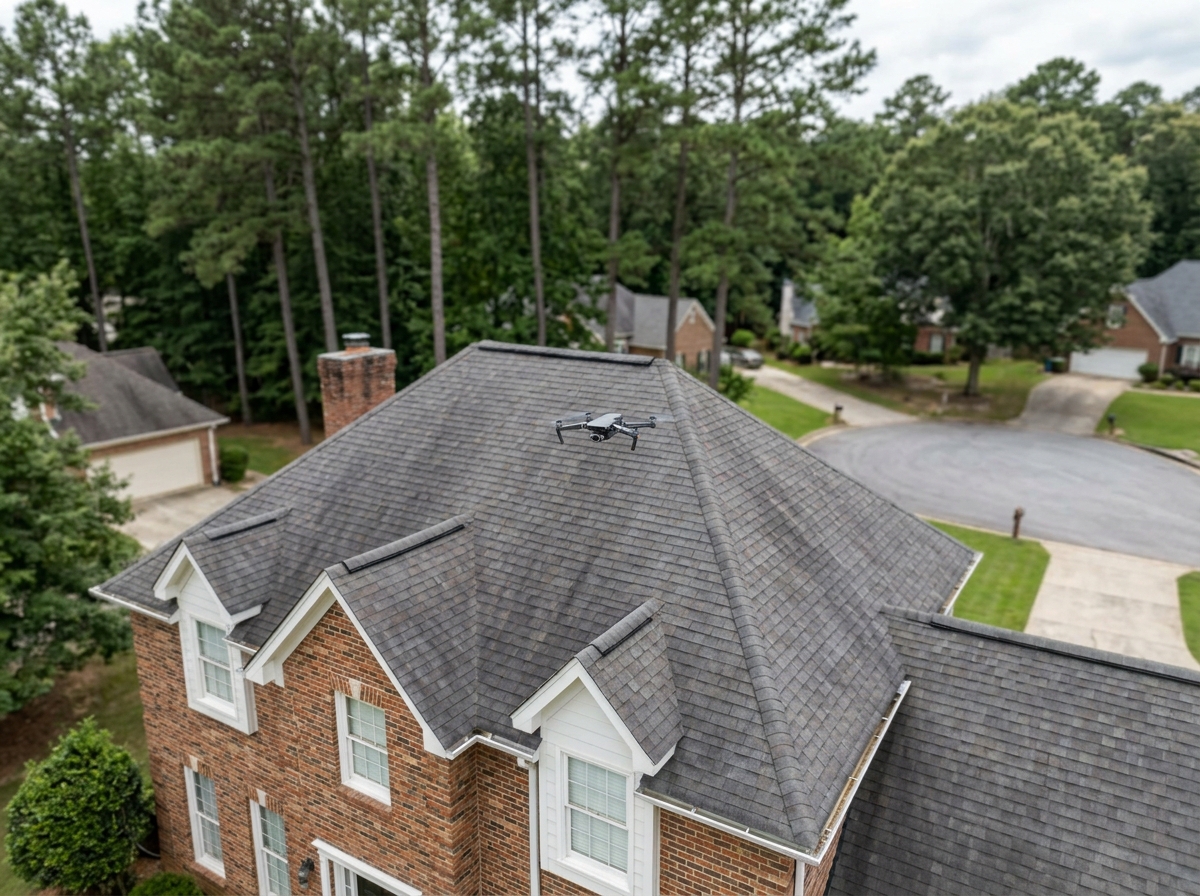
When Drone Imaging Earns Its Keep
Not every inspection needs a drone, and I'll tell you when it doesn't. But there are situations where it clearly helps:
- Steep, tall, or fragile roofs where walking them isn't safe or would risk damage
- Two-story homes in Helena, Pelham, and Hoover where the upper roof is barely visible from the yard
- Heavily shaded roofs under mature trees in Homewood and Mountain Brook
- Post-storm checks after a line of thunderstorms rolls through Shelby County
- Real estate transactions where a buyer wants documentation of the roof's condition before closing
- Sellers who want to know what they're dealing with before a buyer's inspector finds it first
If you're buying in Chelsea or Trussville and the seller says "the roof is about five years old," drone imaging lets us actually look at it — the shingles, the flashing, the vents — instead of taking that on faith.
What Else Comes With a HomeScan Inspection
Drone roof imaging is one part of a broader inspection. Depending on the home and what you need, we also offer:
- General home inspection covering the roof, structure, exterior, plumbing, electrical, HVAC, attic, and interior
- Sanitary lateral video scope — a camera run through the sewer line to look for blockages, root intrusion, or damaged pipe, which matters a lot in older Pelham and Birmingham-area neighborhoods
- Drone services for roof and exterior imaging where access or safety is a concern
I've spent years in construction and as a retired firefighter, and I've crawled more attics and tight spaces than I can count. That background shapes how I look at a house — not just "does it work today," but "what's this going to do in five years?" I'm a licensed Alabama home inspector and an InterNACHI Certified Master Inspector, and I bring the same care to a drone flight over a roof that I'd bring to walking it myself.
If you're not sure whether a drone inspection makes sense for your home, just ask. Sometimes a standard inspection is all you need, and I'll say so.
Let's Get a Look at Your Roof
If you've got a ceiling stain, a roof you can't safely see, or you're buying or selling a home in Pelham, Helena, Chelsea, Hoover, Homewood, Mountain Brook, Vestavia Hills, Trussville, or anywhere in Shelby or Jefferson County, I'd be glad to help.
HomeScan Home Inspection Services LLC is based in Pelham and serves the surrounding communities. Reach out to schedule an inspection or just to ask a question about your roof — no pressure, no sales pitch. If drone imaging would help, I'll tell you. If it wouldn't, I'll tell you that too.
The best time to find a roof problem is before it finds you.