
Sanitary Lateral Video Scope: What Pelham-Area Homeowners Should Know Before They Buy
By Patrick S Dean · November 13, 2026 · 4 min read
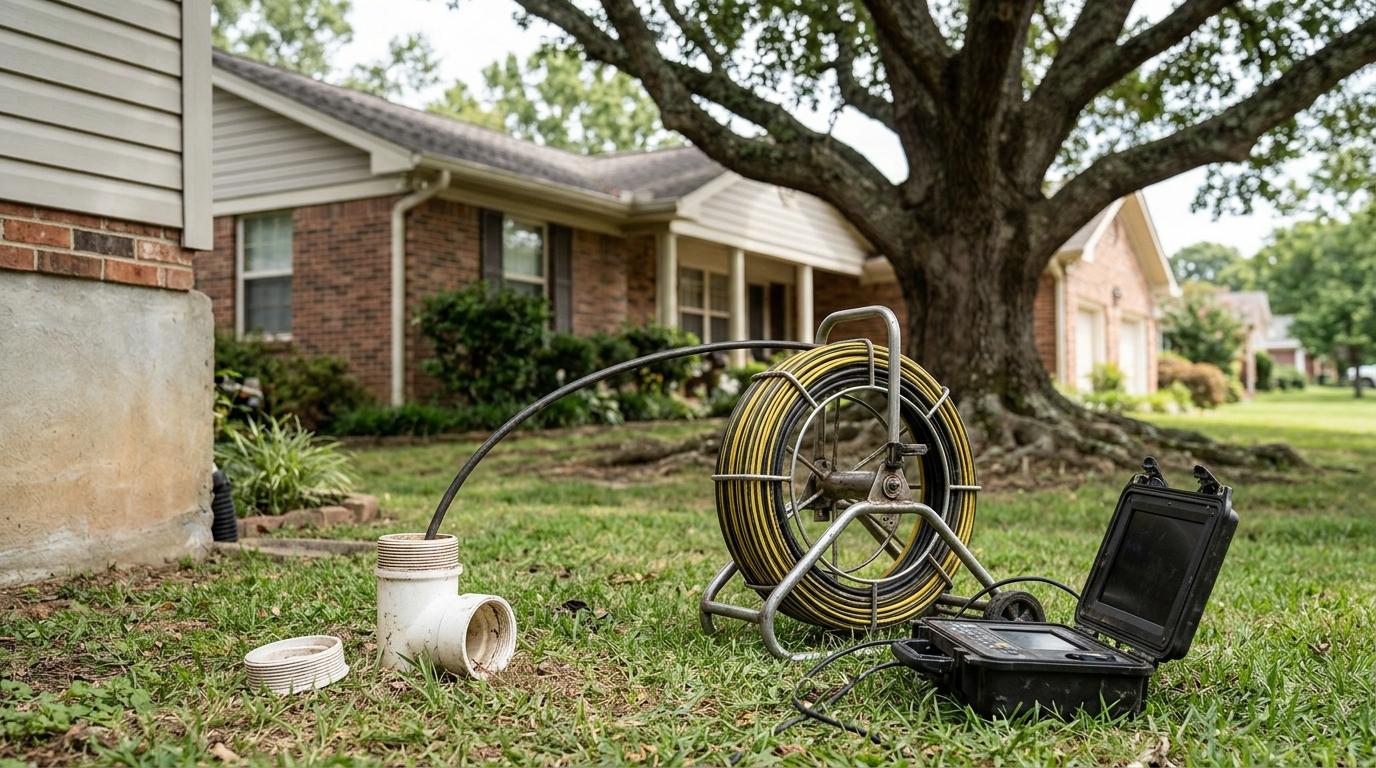
Most home inspections in the Pelham area cover the house from the roof down to the foundation. What they often don't cover is the pipe running from the house to the city main — the sanitary lateral. It's buried, it's out of sight, and when it fails, it can be one of the most expensive surprises a new homeowner faces.
At HomeScan Home Inspection Services LLC, we offer a sanitary lateral video scope as a standalone service or as an add-on to a general home inspection. It's a straightforward idea: we run a specialized camera through the cleanout and watch the inside of the pipe in real time. What shows up on that screen — roots, cracks, bellies, blockages — tells you more about the true condition of the home than almost anything above ground can.
If you're buying in Pelham, Helena, Chelsea, or anywhere in Shelby or Jefferson County, this is worth understanding before you sign.
Why Sewer Lines Fail in Central Alabama
Our part of Alabama has a few conditions that are hard on buried pipes.
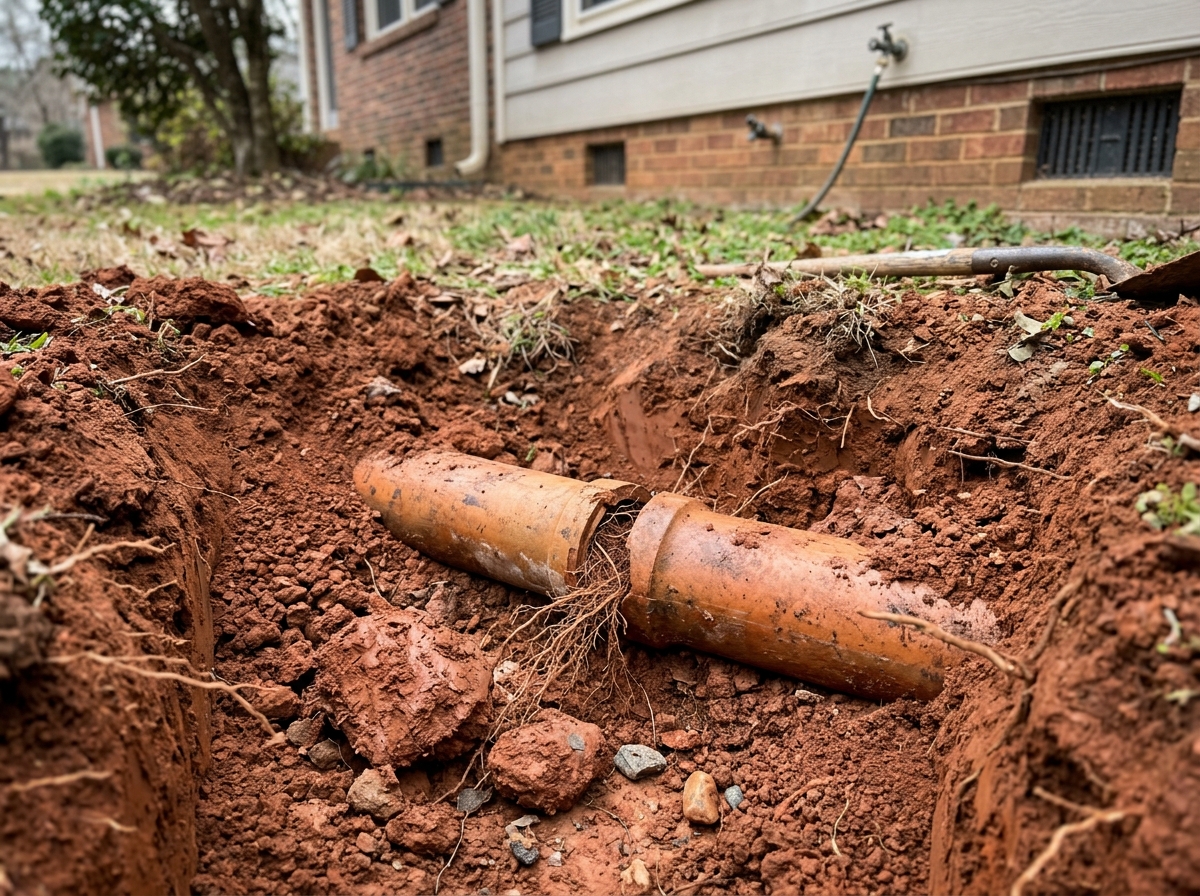
- Mature trees and aggressive roots. Older neighborhoods in Homewood, Mountain Brook, and Vestavia Hills are full of oaks, pines, and maples. Roots seek moisture, and a hairline crack in a clay or cast iron lateral is an open invitation.
- Clay soil that shifts. Shelby County's heavy clay expands when wet and shrinks when dry. That seasonal movement stresses pipe joints, especially in older systems.
- Aging housing stock. Many homes in Pelham and the surrounding areas were built with clay tile or cast iron laterals. These materials can last decades, but they also crack, offset at the joints, and root-intrude over time.
- Heavy summer storms. When the ground saturates fast, poorly sloped or bellied lines can hold water and back up into the house.
None of these are rare. They're just invisible until something goes wrong — usually the week after closing.
What the Camera Actually Shows You
A video scope isn't a guess. It's a look at the actual inside of the pipe, from the cleanout toward the city main. During the scan, we're watching for:
- Root intrusion at joints — the most common finding in older neighborhoods.
- Cracks, breaks, and offset joints where sections of pipe have shifted.
- Bellies — low spots where waste and water pool instead of draining.
- Blockages from grease, debris, or collapsed sections.
- Improper materials or connections, including older clay tile still in service.
We record the run and can walk you through what we saw, where it was, and roughly how far down the line it appeared. If something needs a closer look or a repair plan, that's a conversation for a licensed plumber — but you'll go into it knowing what's there instead of finding out the hard way.
One honest note: a video scope shows the condition of the pipe at the time of the scan. It's a snapshot, not a guarantee about the future.
When It's Worth Adding to Your Inspection
Not every home needs a lateral scope, but there are situations where skipping it is a gamble:
- The home is 25+ years old and still has original clay or cast iron lines.
- There are large trees between the house and the street — very common in Homewood, Mountain Brook, and older parts of Hoover.
- The seller mentions slow drains, gurgling toilets, or past backups.
- You've noticed a sewer smell in the yard or a soggy patch that doesn't dry out.
- You're buying a home with a finished basement or a slab foundation, where a repair would be especially disruptive.
If you're looking at newer construction in Chelsea or Trussville, the line may be PVC and in good shape — but even then, a scope is a reasonable way to confirm the line was installed correctly and hasn't been damaged since.
We offer this as part of our services at HomeScan, and it pairs naturally with a general home inspection. If you're not sure whether it applies to the home you're considering, just ask — we'll give you a straight answer.
How It Fits With the Rest of Your Inspection
A lateral scope is one piece of a bigger picture. A general home inspection covers the structure, roof, electrical, plumbing, HVAC, and more. We also use infrared technology to spot temperature anomalies that can point to moisture or insulation issues, and drone services to safely look at roof surfaces and other areas that aren't easy to reach on foot.
For homes with tight crawlspaces, limited clearance access matters too — some areas simply can't be entered safely, and we'll tell you that honestly rather than pretend otherwise. Every inspection has limits, and we'd rather you know exactly what was and wasn't visible.
If you're buying in Pelham, Helena, Chelsea, Hoover, Homewood, Mountain Brook, Vestavia Hills, Trussville, or anywhere in Shelby or Jefferson County, we can put together the right combination of services for the specific house you're looking at. No two homes need the same scope of work.
Questions? Let's Talk Before You Close
Buying a home is a big decision, and the last thing you need is a nasty surprise buried in the front yard. A sanitary lateral video scope is one of the most useful tools we have for seeing what's really going on underground — and it's a service we're glad to walk you through, question by question.
If you're scheduling an inspection with HomeScan Home Inspection Services LLC, ask us whether a lateral scope makes sense for your property. If you've already had an inspection and want a second look at the sewer line, we can help with that too. Reach out, tell us about the home, and we'll give you a clear, honest answer about what's worth checking.