
What's the Big Deal About Smoke and CO Detectors? A Retired Firefigher and Home Inspector's Take
By Patrick S Dean · November 13, 2026 · 5 min read
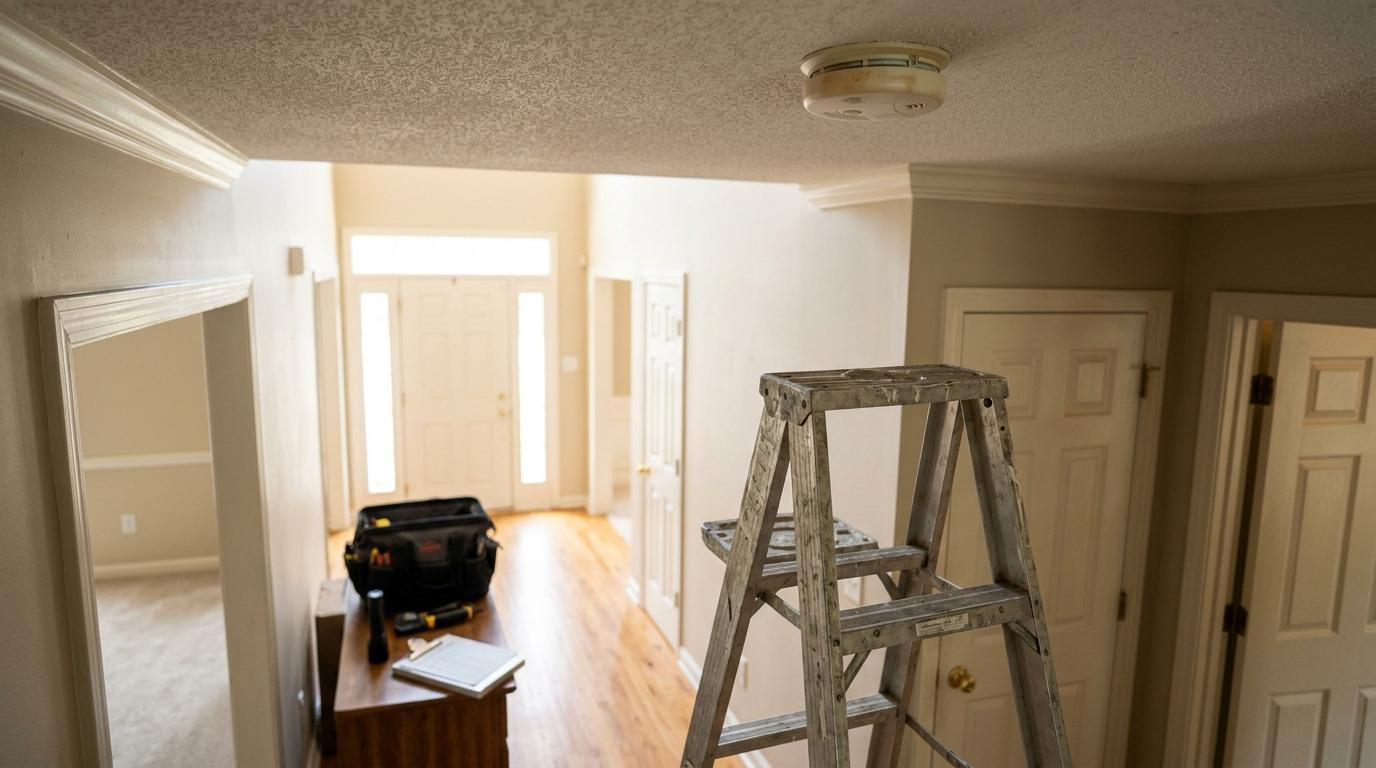
I've crawled through a lot of attics and basements across Pelham, Helena, Chelsea, and Hoover, and I can tell you the single most common safety issue I write up has nothing to do with the roof or the HVAC. It's the smoke and carbon monoxide detectors — or, more often, the lack of them where they're supposed to be.
A recent inspection in a 1990s two-story in Helena is a good example. The house had three smoke detectors, all on the ceiling of the upstairs hallway. Nothing in the kitchen area, nothing near the bedrooms, and the one CO detector was sitting on a shelf in the garage, unplugged, with the battery pulled out. The sellers had lived there for eleven years and assumed everything was fine because the units were "there."
They weren't fine. And this is the conversation I have with almost every buyer and seller I work with. So let's talk about why these little plastic discs matter more than most people think — and what to actually check in your own home this week.
Why These Two Devices Are Non-Negotiable
Smoke detectors and carbon monoxide (CO) detectors do different jobs, and you need both.
Smoke detectors buy you time. In a typical house fire, you may have as little as two to three minutes to get out once the smoke starts spreading. A working smoke alarm on every level and inside/near each sleeping area is what turns "maybe I'll wake up" into "I'm getting my kids out the door."
CO detectors catch something you cannot see, smell, or taste. Carbon monoxide is a byproduct of incomplete combustion — gas furnaces, gas water heaters, gas ranges, fireplaces, and even a car left running in an attached garage. It kills people in their sleep every year, and the early symptoms (headache, nausea, fatigue) feel like a bad cold or flu.
Here in Shelby and Jefferson County, we have a mix of housing stock that makes this especially relevant:
- Older homes in Pelham and Homewood with original or partially updated gas appliances
- 1980s–2000s subdivisions in Helena, Chelsea, and Hoover where the original furnace and water heater are often still in place
- Mountain Brook and Vestavia Hills homes with attached garages and gas fireplaces
- Newer construction in Trussville where everything is tight and well-sealed — which actually means CO can concentrate faster if something goes wrong
This isn't a code lecture. It's just the reality of what's in these houses.
What I Actually Find During Inspection
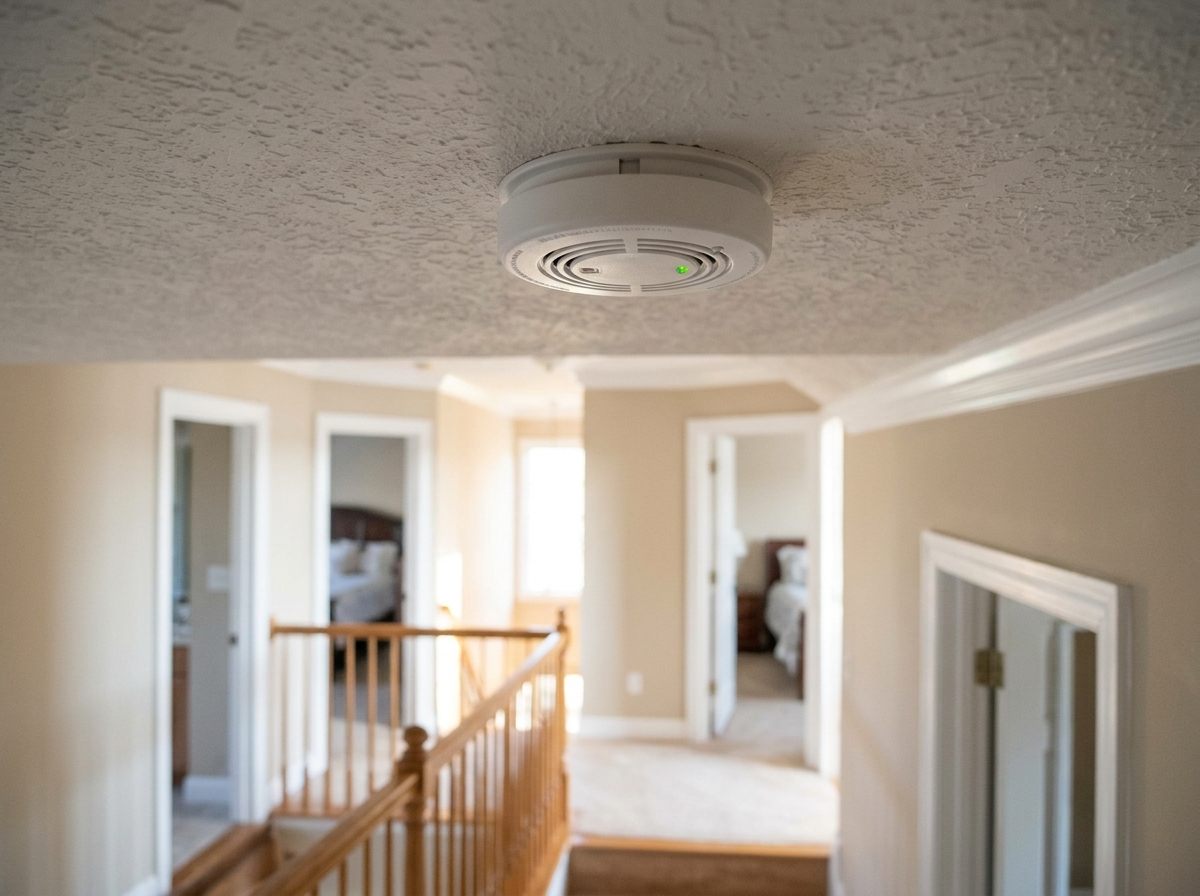
I can't tell you how many times I've looked up to test a detector and have found one of these:
- Dead or missing batteries — the most common issue by far. People pull the battery when it starts chirping at 2 a.m. and never put it back.
- Expired units — smoke detectors have a 10-year lifespan from the manufacture date, and CO detectors typically 5–7 years. If the date stamp on the back is older than that, the sensor is done, even if it still beeps when you push the button.
- Wrong placement — detectors too close to a kitchen (constant false alarms), too close to a bathroom door (steam), or missing entirely from bedrooms and hallways.
- CO detectors only in the wrong spot — a CO detector in the garage is not the same as one near the sleeping areas. You want at least one on each level, and one near the bedrooms.
- Hardwired units with no battery backup — if the power goes out during a storm (and it will, especially in summer thunderstorm season here), a hardwired-only alarm is dead.
- Interconnected alarms that aren't actually interconnected — when one sounds, they should all sound. Many older homes have standalone units.
On a recent inspection in Chelsea, the seller proudly pointed out the brand-new smoke detectors they'd just installed. They were all in the right rooms — but every one of them had the pull-tab still in the battery compartment. They'd never been activated.
What You Should Do This Weekend
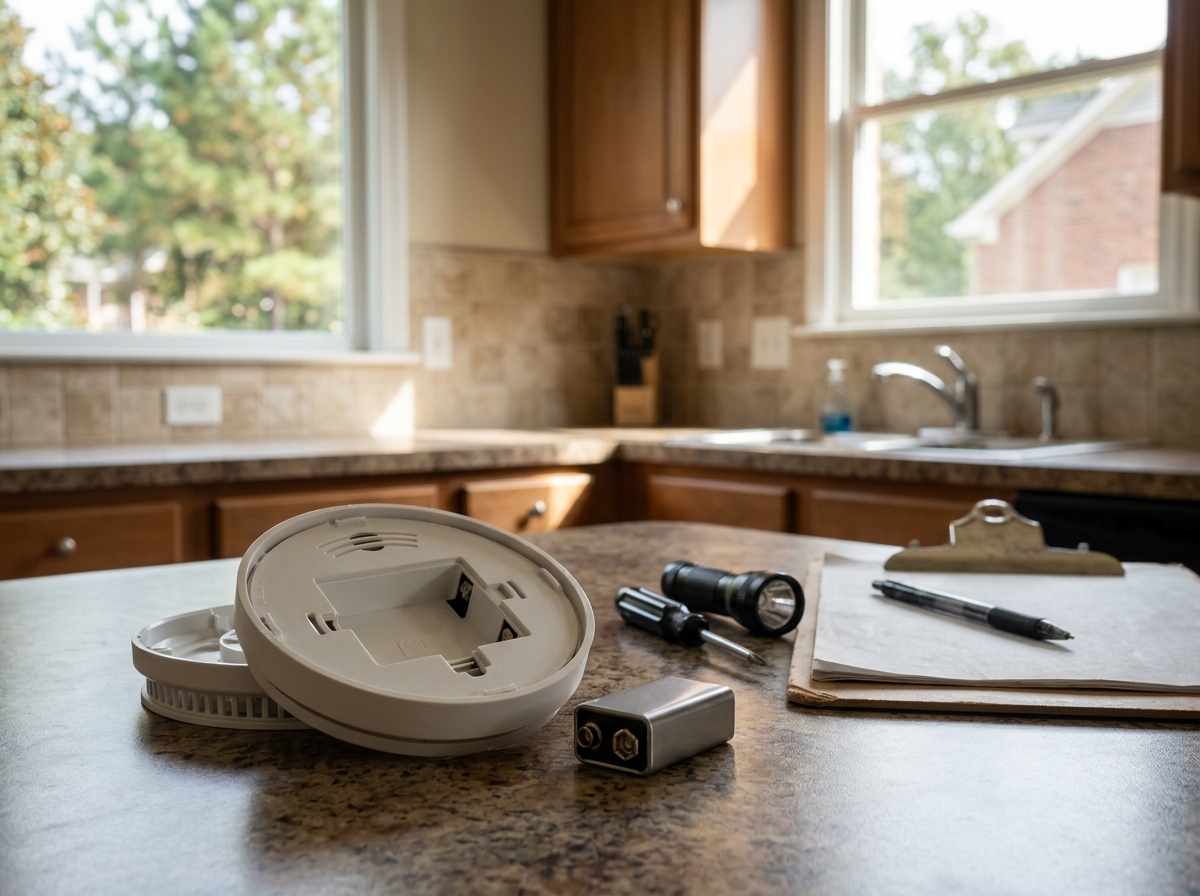
You don't need a professional to check your own detectors, and it takes about fifteen minutes. Here's the short version:
- Walk the house and count. You want a smoke alarm on every level, inside each bedroom, and in the hallway outside sleeping areas. CO detectors on every level and near sleeping areas.
- Press the test button on each one. If it doesn't sound, replace the battery. If it still doesn't sound, replace the unit.
- Check the manufacture date on the back. Smoke detectors: replace at 10 years. CO detectors: replace at 5–7 years, or per the manufacturer's label.
- Replace the batteries at least once a year — a good habit is when you change the clocks.
- Vacuum the face of each detector to clear dust and cobwebs. This is a real issue in older Pelham and Homewood homes with attic or crawlspace-adjacent ceilings.
- Never disable a detector because it keeps going off. Move it, clean it, or replace it — but don't pull the battery.
One more thing: if your CO detector ever alarms, get everyone outside and call 911 or your gas utility. Don't open windows and "wait to see if it happens again."
Where This Fits Into a Home Inspection
Detectors are one piece of a general home inspection — not the whole picture, but an important one. When I inspect a home for a buyer in Pelham, Hoover, or anywhere across Shelby and Jefferson County, I check for the presence, placement, and basic function of smoke and CO alarms as part of the overall safety review.
I want to be clear about scope, though: a home inspection is a visual, non-invasive evaluation of the home's condition at the time of the inspection. It's not a guarantee, and it's not a substitute for a licensed electrician, HVAC technician, or gas professional if something needs repair. What it does is give you a clear, honest picture of what's there — and what isn't.
For homes with gas appliances or an attached garage, I often pair the general inspection with a Sanitary Lateral Video Scope to check the sewer line, and on certain properties I use drone services to look at roof and chimney components that aren't safely accessible from the ground. Between the crawlspace work, the roof, the mechanical systems, and the safety items like detectors, the goal is the same: no surprises after closing.
Let's Take a Look Together
If you're buying or selling a home in Pelham, Helena, Chelsea, Hoover, Homewood, Mountain Brook, Vestavia Hills, Trussville, or anywhere in Shelby or Jefferson County, I'd be glad to walk the property with you and give you a straight answer about what's working and what needs attention — detectors included.
You don't need to have everything figured out before you call. Most of my clients don't. Whether you're a first-time buyer, a seller getting ready to list, or a longtime homeowner who just wants a second set of eyes, reach out to HomeScan Home Inspection Services LLC and ask your questions. I'm happy to talk through what a general home inspection covers, what it doesn't, and whether a lateral scope or drone look makes sense for your property.
No pressure, no sales pitch — just a local inspector who's seen a lot of houses and would rather you know what you're getting into.