Standard Home Inspection vs FHA Inspection: What Buyers in Pelham and Shelby County Need to Know
By Patrick S Dean · November 14, 2026 · 5 min read

If you're buying a home in Pelham, Helena, Chelsea, or anywhere else in Shelby County, you've probably heard the phrase "FHA inspection" tossed around by a lender, a real estate agent, or a friend who bought a house last year. It sounds like a specific type of inspection you're required to order. Most of the time, it isn't — and that confusion costs buyers clarity at exactly the moment they need it.
At HomeScan Home Inspection Services LLC, I walk buyers through this distinction regularly. Here's the plain-English version: an FHA appraisal and a general home inspection are two different things, done by two different people, for two different reasons. If you're using an FHA loan to buy a home in Vestavia Hills, Hoover, or Trussville, you'll likely encounter both — and knowing which one protects you is the whole point.
What People Mean by an "FHA Inspection"
There is no separate FHA inspection that a homebuyer orders. What actually happens is this: when you finance a purchase with an FHA loan, the lender sends out an FHA-approved appraiser. That appraiser's job is to establish the home's value and confirm it meets the U.S. Department of Housing and Urban Development's minimum property requirements — things like safe access, a functioning roof that keeps water out, working utilities, and no obvious health or safety hazards.
That visit is an appraisal with a compliance check baked in. It is not a thorough evaluation of the home's systems and components. The appraiser isn't crawling the attic, running the water heater through a full cycle, or scoping the sewer lateral. They're confirming the home is acceptable collateral for the loan.
This matters because I've seen buyers in Mountain Brook and Homewood assume the FHA appraisal gave them a clean bill of health — then move in and discover a failing HVAC system, active moisture in the crawlspace, or a roof at the end of its service life. The appraisal was never designed to catch those things.
What a Standard Home Inspection Actually Covers
A general home inspection is a visual, non-invasive evaluation of the home's readily accessible systems and components. It's ordered by you — the buyer — and it works for you, not the lender. At HomeScan, a standard inspection typically includes:
- Roof and attic — shingles, flashing, ventilation, framing, and signs of moisture intrusion
- Structure — foundation, crawlspace, basement, walls, floors, and visible framing
- Electrical — service panel, wiring methods, outlets, GFCIs, and grounding where visible
- Plumbing — supply lines, drains, fixtures, water heater, and functional flow
- HVAC — heating and cooling equipment, distribution, and operation within normal parameters
- Exterior — siding, trim, grading, drainage, walkways, and driveways
- Interior — windows, doors, stairs, and evidence of prior repairs or water damage
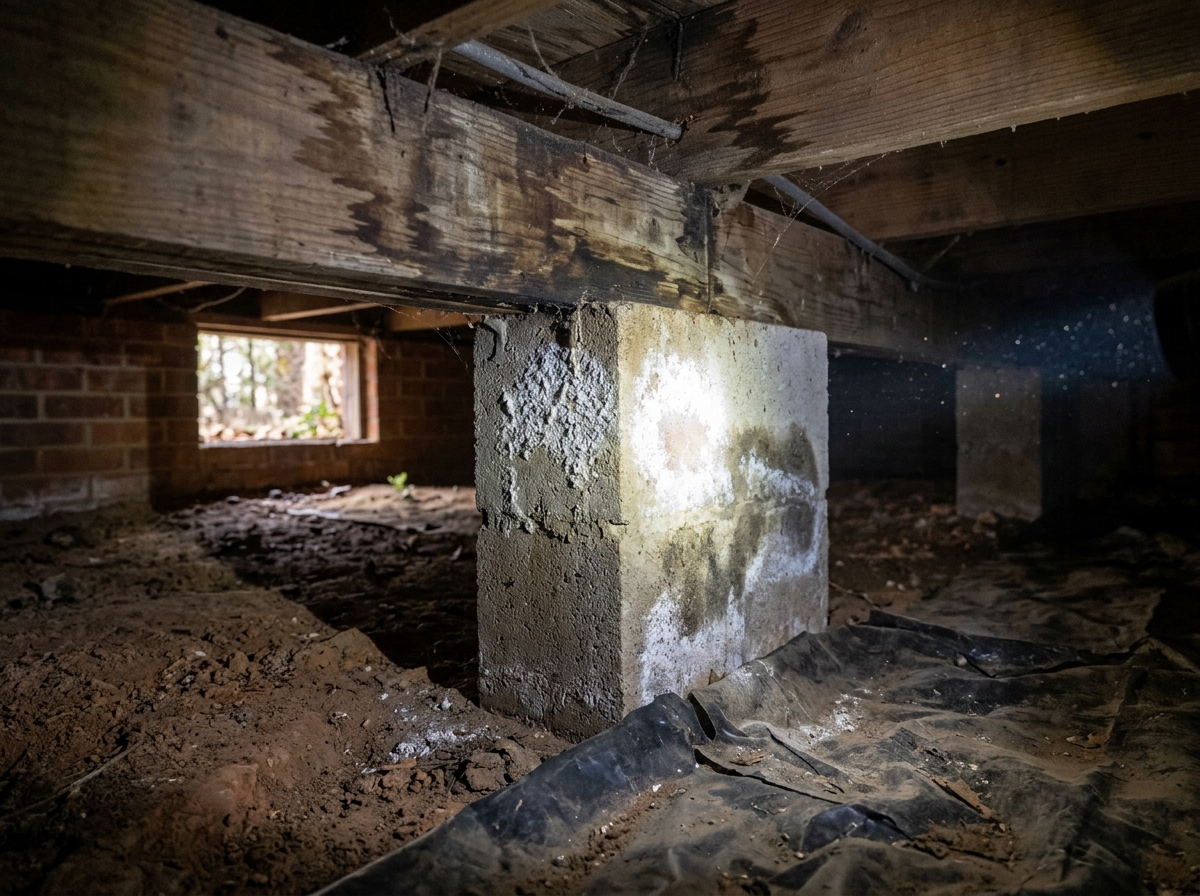
Because we're in central Alabama, some of these items carry extra weight. Our humid summers and heavy spring storms mean drainage and crawlspace moisture are recurring themes in Pelham and Helena, especially in older neighborhoods with mature trees and original grading. Homes closer to the Cahaba River corridor and low-lying areas of Shelby County tend to show more moisture-related wear than ridge-top properties in Vestavia Hills.
A standard inspection is also where our additional services come in. For homes on older sewer lines — common in established parts of Homewood, Hoover, and Trussville — a sanitary lateral video scope lets us look inside the pipe from the house to the city main and document cracks, root intrusion, or bellies that no visual walkthrough would reveal. For steep or high roofs, our FAA Part 107 drone capabilities let us get a clear look at surfaces that aren't safe to walk. And for tight crawlspaces, limited-clearance equipment helps us document conditions that would otherwise go unrecorded.
Where the Two Overlap — and Where They Don't
Here's a simple way to keep them straight:
Item: FHA Appraisal / Standard Home Inspection
Ordered by: Your lender / You
Purpose: Confirm value and minimum property requirements / Document the home's condition
Who performs it: FHA-approved appraiser / Licensed home inspector
Scope: Visual, limited to HUD's minimum criteria / Visual, non-invasive, systems and components
Report goes to: Lender / You
There is some overlap. Both will note obvious safety hazards and major visible defects. But the appraisal's threshold is "does this home meet FHA's minimum standards," while an inspection's purpose is "what is the actual condition of this home, and what should the buyer know before closing."
One practical note: if an FHA appraiser flags a condition — peeling paint on pre-1978 homes, a missing handrail, exposed wiring — the lender may require it to be repaired before the loan closes. That's a lending requirement, not a home inspection finding. A good inspection report can help you understand the scope of those items and have informed conversations with your agent and contractor before you commit to repairs.
Neither process is a guarantee. Inspections are visual and limited in scope — we can't see inside walls, predict how long a component will last, or uncover everything a specialist might. For concerns about radon, mold, asbestos, structural engineering, or anything requiring a licensed trade professional, the right next step is a specialized evaluation.
Should You Skip the Inspection If You're Using an FHA Loan?
No — and I'd say that even if I weren't in the business. The FHA appraisal exists to protect the lender's investment. A home inspection exists to protect yours. Those are not the same job, and the appraisal will not tell you that the water heater is 14 years old, that the crawlspace has active moisture, or that the sewer lateral has a root intrusion waiting to become a $12,000 problem.
If you're buying in Shelby County or Jefferson County — whether it's a 1970s ranch in Pelham, a newer build in Chelsea, or a century-old home in Mountain Brook — the inspection is your opportunity to learn what you're actually buying while you still have room to negotiate or walk away. I've got 25-plus years of construction background and time as a retired firefighter, and both of those lenses shape how I look at a house. I'm not there to scare you or to bless the purchase. I'm there to give you clear, documented information you can act on.
Scheduling an Inspection with HomeScan
If you're under contract on a home in Pelham, Helena, Chelsea, Hoover, Homewood, Mountain Brook, Vestavia Hills, Trussville, or anywhere nearby, the inspection window is usually short. Reach out early so we can get on the calendar and give you time to review the report before your contingency deadline.
We offer general home inspections, sanitary lateral video scopes, and drone roof assessments — and if you're not sure which services make sense for the property you're buying, just ask. I'm happy to talk through it with you, no pressure either way.
You can schedule online or give us a call. If you've got questions about the difference between an FHA appraisal and a home inspection, or about anything you've read here, send them over. That's what we're here for.