
Why Is My Inspector Advising Me to Add GFCI Receptacles? A Homeowner's Guide
By Patrick S Dean · November 28, 2026 · 6 min read
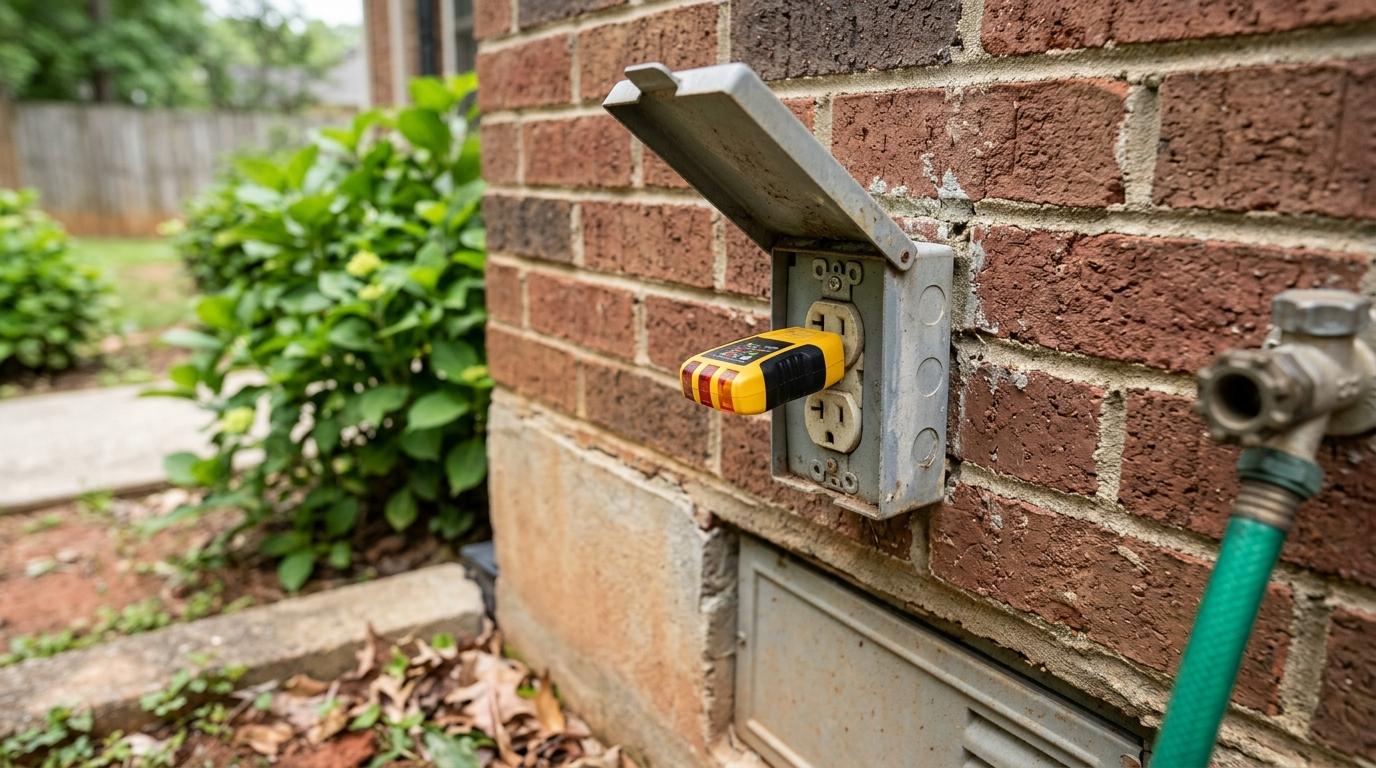
You just got your inspection report back on a house in Helena or Chelsea, and there it is again: "Recommend GFCI protection at kitchen, bath, and exterior receptacles." Maybe you're the seller, wondering if this is a big deal before closing. Maybe you're the buyer, wondering why a house that looks perfectly fine needs electrical work.
This is one of the most common items I write up as a licensed Alabama home inspector, and it's also one of the most misunderstood. GFCI receptacles aren't a cosmetic upgrade or a code inspector's pet project — they're a shock-protection device that has saved a lot of people from a lot of bad days. Here's what they actually do, why your inspector flagged them, and what your realistic options are.
What a GFCI Actually Does
GFCI stands for Ground Fault Circuit Interrupter. Inside the receptacle (or a GFCI breaker in the panel) is a small sensing circuit that constantly compares the current going out on the hot wire to the current coming back on the neutral.
In a healthy circuit, those two numbers match. If they don't — because current is leaking somewhere it shouldn't, like through water, a damaged cord, or a person — the GFCI trips in a fraction of a second and cuts power.
That leak is called a ground fault, and it's exactly what happens when someone drops a hair dryer near a sink or reaches for an outlet with wet hands. A standard receptacle has no idea any of this is happening. A GFCI does.
A few practical things worth knowing:
- GFCIs protect people, not equipment. They won't stop a surge from frying your electronics.
- They can be installed as a receptacle, as a breaker, or upstream of other outlets on the same circuit.
- They do wear out over time and can fail silently. The test and reset buttons exist for a reason.
- A GFCI that trips repeatedly isn't "just being sensitive" — it's usually telling you something.
Where GFCIs Are Required, and Why Your Report Mentions Specific Rooms
The National Electrical Code has required GFCI protection in specific locations for decades, and the list has grown over time. The usual suspects:
- Bathrooms
- Kitchens, including countertop receptacles
- Garages and unfinished basements
- Outdoors, including patios and pool areas
- Crawl spaces and unfinished areas
- Laundry areas and utility sinks
- Within a set distance of sinks and other water sources
Older homes are where this gets interesting. Much of the housing stock in Pelham, Helena, and the older pockets of Hoover and Homewood was built before these requirements existed, or was wired when the rules were narrower. A 1970s ranch in Pelham may have had no GFCI protection anywhere when it was built. A 1990s home in Chelsea might have them in the bathrooms but not the kitchen. A newer build in Trussville may have them everywhere — until someone replaced a tripping GFCI with a standard receptacle because it kept nuisance-tripping.
That last one is more common than you'd think, and it's a real safety downgrade. If I see a standard receptacle in a bathroom or garage, I flag it, and I also flag missing GFCI protection on exterior outlets — which in Alabama get plenty of use for holiday lights, pressure washers, and yard tools in wet conditions. In fact, I will flag a missing GFCI missing from wherever current standards recommend.
Why This Matters More in Alabama Than You Might Expect
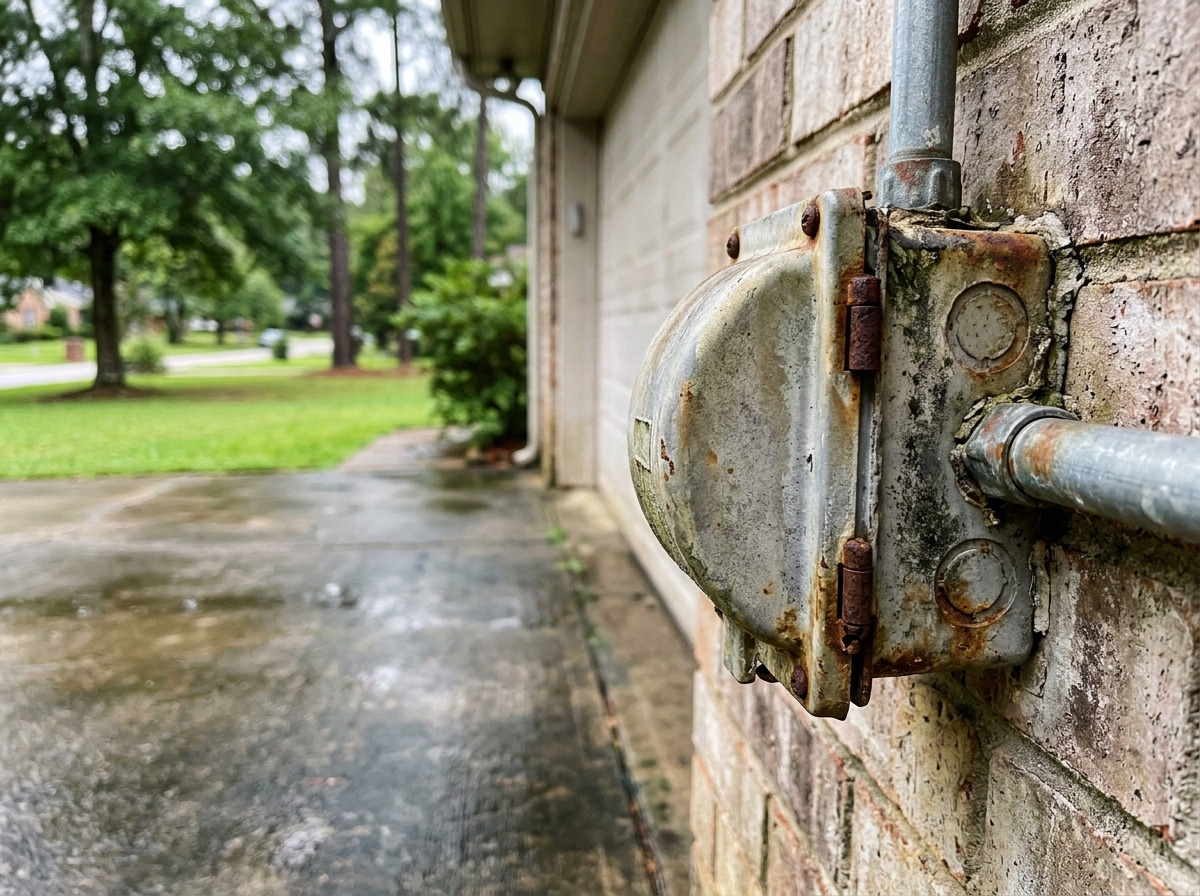
Our climate is hard on electrical systems. Between the humidity, the summer thunderstorms, and the occasional stretch where everything feels damp for weeks, moisture finds its way into places it shouldn't — garage walls, crawl spaces, exterior boxes, and around hose bibs and irrigation.
Add in the fact that a lot of Shelby and Jefferson County homes have crawl spaces, detached garages, and outdoor workshops, and you've got a lot of receptacles in damp or wet locations. A standard receptacle in a damp crawl space or on a garage wall is a shock risk every time someone plugs something in with wet hands.
I also see a fair number of DIY electrical repairs. Homeowners are capable people, but swapping a GFCI for a regular receptacle — or removing one because it kept tripping — is a fix that removes the protection rather than solving the underlying problem. When I find that, I note it clearly and recommend evaluation by a licensed electrician.
One more thing worth mentioning: GFCI protection is only part of the picture. Proper grounding, correct polarity, and safe panel wiring all matter too, and a general home inspection looks at those alongside the GFCIs.
What It Means If You're Buying, Selling, or Staying Put
If you're buying: a recommendation to add GFCI protection is common and usually not a dealbreaker. It's a straightforward electrical upgrade, and it's worth asking a licensed electrician for a quote before you finalize your negotiation. Don't assume the seller will handle it, and don't assume it's expensive — get real numbers from a real electrician rather than guessing.
If you're selling: expect this item to come up, especially on older homes in Pelham, Helena, and Homewood. You can address it before listing, negotiate it at the table, or disclose it and let the buyer decide. What you shouldn't do is quietly swap a tripping GFCI for a standard outlet to make the report look cleaner. That's the kind of thing that gets found later, and it doesn't help anyone.
If you're staying put: walk through your own home this weekend. Check bathrooms, kitchen counters, garage, laundry, and any exterior outlets. Press the test button on each GFCI and confirm it resets. If a receptacle in a wet location isn't a GFCI, that's worth a call to an electrician. If you're not sure what you're looking at, that's a normal question — and it's one I answer all the time.
A quick note on scope: a home inspection is a visual, non-invasive evaluation of the home's condition at the time of inspection. It's not a code-compliance inspection and it's not a guarantee. My job is to tell you what I observed and what I'd recommend a qualified specialist look at further.
How HomeScan Approaches Electrical Findings
When I inspect a home in Pelham, Hoover, Vestavia Hills, Mountain Brook, or anywhere across Shelby and Jefferson County, I test GFCIs where they're present and note where protection is missing. I take infrared images of panels and suspect connections when it helps tell the story, and I write findings in plain language so you know what you're looking at and why it matters.
For homes with crawl spaces, I use limited-clearance equipment to get eyes on areas that are hard to reach, and for steep or inaccessible roof areas I can use drone imaging. If your home has a septic system or you're concerned about the sanitary lateral, I also offer a sanitary lateral video scope — because underground problems don't show up in a walkthrough.
I'm a retired firefighter and have spent more than 25 years in construction, so I've seen what happens when small electrical shortcuts meet real-world water and heat. That perspective shapes how I write reports: direct, specific, and focused on what you actually need to know.
Questions About Your Report? Let's Talk
If you've got a report in front of you with a GFCI recommendation and you're not sure what to do next, you don't have to figure it out alone. Whether you're buying in Chelsea, selling in Helena, or just want a second set of eyes on the electrical in your Pelham home, HomeScan Home Inspection Services LLC is here to help.
Patrick S Dean and the team serve Pelham, Helena, Chelsea, Hoover, Homewood, Mountain Brook, Vestavia Hills, Trussville, and the surrounding Shelby and Jefferson County communities. Reach out with your questions, or schedule a general home inspection, sanitary lateral video scope, or drone service. No pressure, no sales pitch — just clear answers about your home.